
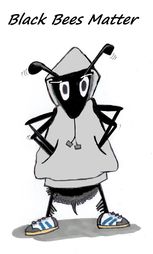
 Zwarte Bij
Literatuur
Een aanzienlijke hoeveelheid literatuur heeft zich gewijd aan de studie van honingbijen en bijenteelt, vaak met als primair doel de bevordering van bijenteeltpraktijken. Deze publicaties variëren van basiscursussen en geavanceerde trainingen tot methoden voor het selecteren van hoogwaardige koninginnen voor bijenkolonies. Bovendien wordt er uitgebreid geschreven over de hygiëne binnen bijenvolken en bijenteeltpraktijken.
De inhoud van deze literatuur richt zich vrijwel volledig op het beheren en exploiteren van honingbijenkolonies. Echter, de huidige methoden voor selectie hebben aanzienlijke uitdagingen veroorzaakt voor bijenvolken, met verstrekkende gevolgen voor hun gezondheid en overleving.
Talrijke wetenschappelijke studies en publicaties werpen diepgaande inzichten op in het leven van honingbijen. Op deze pagina worden dergelijke studies, publicaties en boeken overzichtelijk gepresenteerd, waardoor ze toegankelijk zijn voor een breed publiek dat geïnteresseerd is in dit onderwerp en zich verder wil verdiepen in de materie.
SICAMM
Statement SICAMM september 2025.
* De conservatie en restauratie van de zwarte honingbij (Apis mellifera mellifera).
Statement SICAMM september 2025.
* De conservatie en restauratie van de zwarte honingbij (Apis mellifera mellifera)(met toestemming vertaald naar Nederlands).
Studies
Jacques van Alphen Janauri 2025.
* The Downside of Selection: A Forgotten Cause of Honeybee Decline.
Jacques van Alphen Janauri 2025.
* The Downside of Selection: A Forgotten Cause of Honeybee Decline (met toestemming vertaald naar Nederlands).
Visick, Adams et al Juni 2024.
* Do nest sites limit wild honey bee colonies? Decoding swarm waggle dances to assess nest site availability.
Derek Morville Mitchell. Mei 2024.
* Are man made hives valid thermal surrogates for natural honey bee nests (Apis mellifera)?
J.J.M. van Alphen, J. Bouw. April 2024.
* De status van de zwarte honingbij.
Pan et al. Maart 2024.
* Dutch landscapes have lost insect-pollinated plants over the past 87 years.
Shanahan et al. januari 2024.
* Thinking inside the box: Restoring the propolis envelope facilitates honey bee social immunity.
Kohl Patrick Laurenz. December 2023.
* The buzz beyond the beehive: population demography, parasite burden and limiting factors of wild-living honeybee colonies in Germany.
Mats Niklasson et al. November 2023.
* Free-living colonies of native honey bees (Apis mellifera mellifera) in 19th and early 20th century Sweden.
Derek Morville Mitchell. Oktober 2023.
* Honeybee cluster - not insulation but stressful heat sink.
Oliver D. Visick, Francis L. W. Ratnieks. September 2023.
* Density of wild honey bee, Apis mellifera, colonies worldwide.
Kathleen A. Dogantzis. November 2022.
* Understanding the evolutionary origin and ancestral composition of honey bee (Apis mellifera) populations.
Borgelt et al. Juni 2022.
* More than half of data deficient species predicted to be threatened by extinction.
Derek Morville Mitchell. Juni 2022.
* Honey bee (Apis mellifera) size determines colony heat transfer when brood covering or distributed.
Erik Tihelka et al. Oktober 2020.
* Mitochondrial genomes illuminate the evolutionary history of the Western honey bee (Apis mellifera).
Themudo et al. Juni 2020.
* Declining genetic diversity of European honeybees along the twentieth century.
van Alphen & Fernhout. Juni 2020.
* Natural selection, selective breeding, and the evolution of resistance of honeybees (Apis mellifera) against Varroa.
Requier et al. November 2019 .
* Contribution of European forests to safeguard wild honeybee populations.
Derek Morville Mitchell. Mei 2019 .
* Nectar, humidity, honey bees (Apis mellifera) and varroa in summer: a theoretical thermofluid analysis of the fate of water vapor from honey ripening and its implications on the control of varroa destructor.
Derek Morville Mitchell. Mei 2019 .
* Thermal efficiency bee culture.
Derek Morville Mitchell. December 2018 .
* Thermal efficiency extends distance and variety for honeybee foragers analysis of the energetics of nectar collection and desiccation by Apis mellifera.
Ellis et al. Mei 2018 .
* Introgression in native populations of Apis mellifera mellifera L: implications for conservation.
Reemer. Maart 2018 .
* Basisrapport voor de Rode Lijst Bijen.
Derek Morville Mitchell. Mei 2017.
* Honey bee engineering: top ventilation and top entrances.
Parejo et al. December 2016.
* Using whole genome sequence information to foster onservation efforts for the European dark honey bee Apis mellifera mellifera.
Munoz et al. November 2016.
* SNPs selected by information content outperform randomly selected microsatellite loci for delineating genetic identification and introgression in the endangered dark European honeybee Apis mellifera mellifera.
Derek Morville Mitchell. September 2015.
* Ratios of colony mass to thermal conductance of tree and man-made nest enclosures of Apis mellifera: implications for survival, clustering, humidity regulation and Varroa destructor.
Pinto et al. April 2015.
* Genetic integrity of the dark European honey bee (Apis mellifera mellifera) from protected populations. A genome-wide assessment using SNPs and mtDNA sequence data.
Gulzar et al. Januari 2014.
* Honey: Its History and Religious Significance: A Review.
Hudewenz en Klein. November 2013.
* Competition between honey bees and wild bees and the role of nesting resources in a nature reserve.
Han et al. Juni 2012.
* From where did the western honeybee Apis mellifera originate.
Peeters et al. Juni 2012.
* De Nederlandse bijen Hymenoptera: Apidae S.L.
Miguel et al. April 2010.
* Both geometric morphometric and microsatellite data consistently support the diffferentiation of the Apis mellifera M evolutionary branch.
M. Simone-Finstrom, M. Spivak. Februari 2010.
* Propolis and bee health. The natural history and significance of resin use by honey bee.
Peeters en Reemer. Februari 2003.
* Bedreigde en verdwenen bijen in Nederland (Apidae S.L). Basisrapport rode lijst.
Garnery et al. September 1998.
* Genetic diversity of the west European honey bee (Apis mellifera mellifera and A. m. iberica).
L. Bailey. Mei 1963.
* The "Isle of Wight Disease": The Origin and Significance of the Myth.
Boeken.
* Jacques van Alphen: ISBN; 978-1-914934-83-4. * Honeybees. A natural and a less natural history.
* Thomas D. Seeley: ISBN; 978-0-691-16676-6. * The Lives of Bees. The Untold Story of the Honey Bee in the Wild.
* Thomas D. Seeley: ISBN; 978-0-691-14721-5. * Honeybee Democratie.
* Thomas D. Seeley: ISBN; 978-0-674-95376-5. * The Wisdom Of The Hive.
* Thomas D. Seeley: ISBN; 978-0-691-19140-9. * Following the Wild Bees.
* Thomas D. Seeley: ISBN; 978-0-691-61134-1. * Honeybee Ecology. A Study of Adaption in Social Life.
* Jacques van Alphen: ISBN; 978-94-92754-448. * Honingbijen. Een natuurlijke en minder natuurlijke historie.
* Robin Moritz & Robin Crewe: ISBN; 978-0-19-087228-1. * The Dark Side Of The Hive. The Evolution of the Imperfect Honey Bee.
* Lars Chittka: ISBN; 978-0-691-18047-2. * The Mind of a Bee. A Rich and Surprising Exploration of the Intelligence of Bees.
* Brian R. Johnson: ISBN; 978-0-691-20488-8. * Honey Bee Biology.
* Beowulf A. Cooper: ISBN; 979-8-566-46656-9 (pdf).. * The Honeybees of the Britsch Isles.
* Dave Goulson: ISBN; 0-19-852607-5. * Bumblebees. Behavior and Ecology.
* Steven Falk: ISBN; 978-90-215-7551-3. * Veldgids Bijen voor Nederland en Vlaanderen.
* Noah Wilson-Rich: ISBN; 978-90-2159-2353. * Bijen. Hun leven en rol in de natuur.
* Eva Crane: ISBN; 978-04-1592-4672. * The World History of Beekeeping and Honey Hunting.
* Jurgen Tautz: ISBN; 978-90-5011-4738. * Honingbijen. Een bijenvolk is wel zowat de meest bijzondere manier waarop de natuur materie en energie in ruimte en tijd heeft georganiseerd.
Educatieve video's
Grace McCormack; Protecting honey bees on the island of Ireland.
Een mooie presentatie en de moeite waard om helemaal af te kijken.
Schotland is de thuisbasis van Apis mellifera mellifera - een veerkrachtige ondersoort van de honingbij, bekend om zijn winterhardheid en vermogen om te gaan met
natte en vaak strenge winters, slecht en onrustig zomerweer dat typisch is voor de westelijke Atlantische kust.
De afgelopen decennia zijn inheemse bijen echter geconfronteerd met talloze bedreigingen, waaronder de massale import van niet-inheemse bijensoorten,
die nog is geïntensiveerd door de wereldhandel en de commerciële bijenteelt. De import van honingbijen is vaak van ongeschikte soorten,
die niet gewend zijn aan andere klimaten en leidt vaak, wanneer de onvermijdelijke kruisparingen plaatsvinden,
tot een verslechtering van het gedrag van de honingbijen ter plaatse.
Neem de tijd om de video te bekijken en te beluisteren.
Ons werk op Welna Tongeren trok de aandacht van het programma Vroege vogels van BBN/VARA. Zij zijn op bezoek geweest om een radioreportage te maken van ons werk.
Beluister op je gemak het radiofragment.
Laatste wijziging 06-08-2024